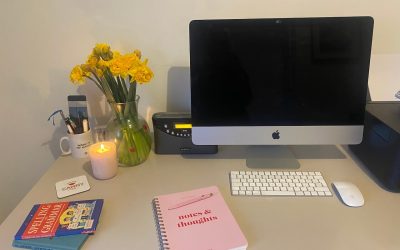
Picture the scene. A rooftop terrace in the blazing sunshine. An open-plan restaurant with refectory tables and benches to encourage communal eating. Meals, prepared with herbs freshly-picked from said rooftop terrace.
And a co-working space lined with jars of pens, piles of Post-it notes, Lego sets for breakout sessions—and a brace of gym-fresh digital nomads, complete with standing desks, bluetooth headsets, and huge smiles.
This is Zoku, Amsterdam.
And this is the mid-week getaway of dreams.
We’re here in the corner.
Three marketers from three different countries. Not losing our religions, but instead having the kinds of big conversations that only really happen away from home.
The state of the world. The implications for our respective businesses. The incredible bite of the cookies on the counter in the room. And why these things matter so much.
On the horizon?
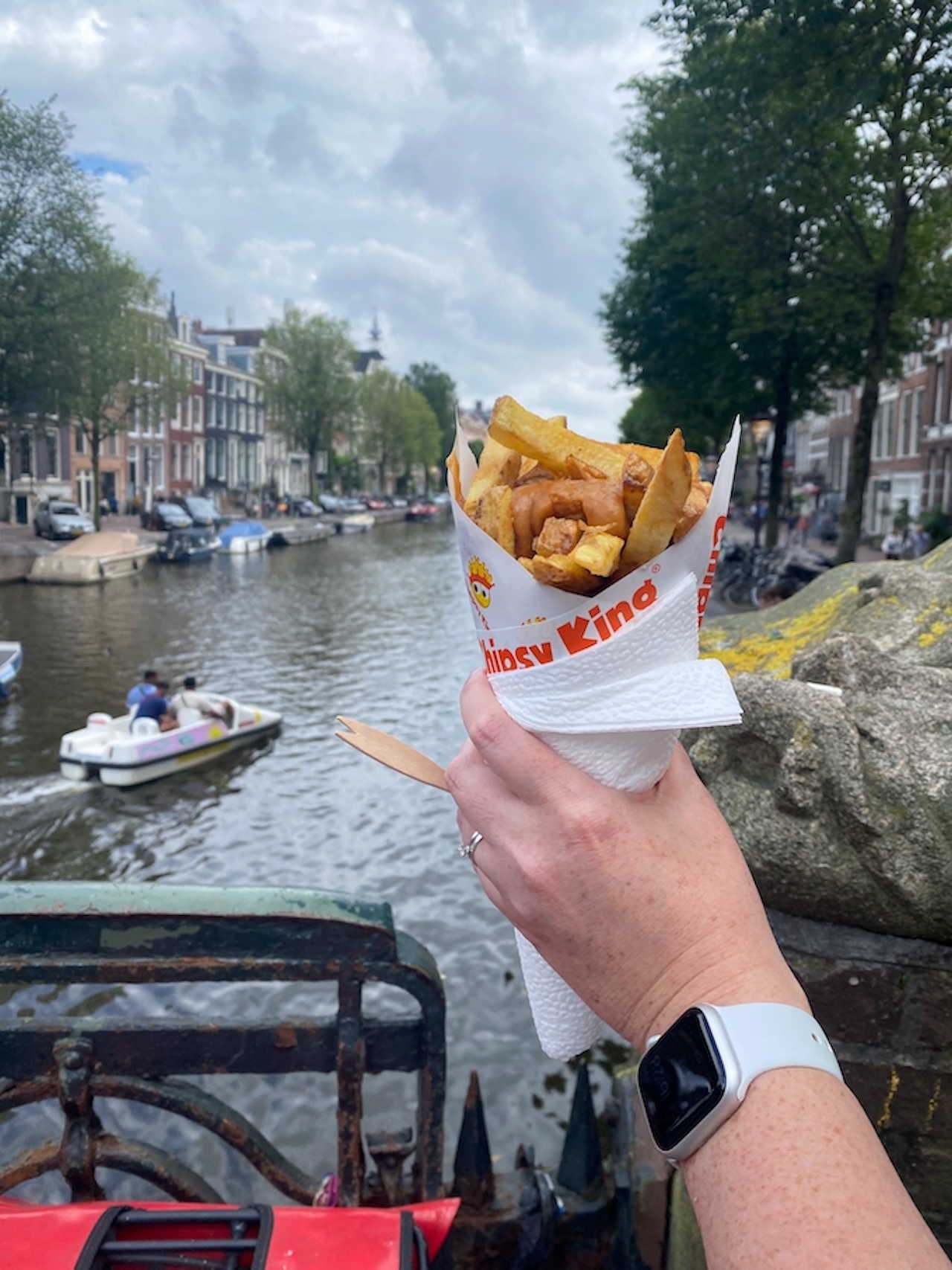
What awaits us? Well, the promise of canals, chips with peanut sauce, bicycles, and the spectre of AI for starters.
It’s August 2024 and change is in the air. The WhatsApp chat that got us all here, complete with packing lists and flight times, is called ‘Hamsterjam.’ Soon, it’s joined by another, called ‘All things AI.’
It’s only with extreme reluctance that I agree to be added to the second.
I’m a writer. AI is an anathema. It’s boring. It’s irrelevant. When I asked Chat GPT what washing machine I should buy, every option it gave was out-of-stock. Across Europe. Frankly, I haven’t found a way to make AI make my life any easier. Or have I?
AI. What is it good for?
Well, I suppose there’s Otter.ai for a start. I’ve been using the nifty app for years. It’s got more accurate and has better features now than when I started. It can even recognise repeat interviewees (especially Keith from Forepoint). And it makes super short work of the job of transcribing long interviews and meetings.
Then there’s Grammarly, with its tenacious plug-in that follows your every move.
I was an early adopter and loved its clean interface and the way it made it easy to spot simple errors and to play around with tone of voice. Except it soon got *too* helpful, made clunky ‘suggestions,’ and deleting its suggested changes took longer than the time it saved.
Unsubscribe.
So, yes – I was AI is good for some things.
But I sure as hell wasn’t using it to write.
The AI LinkedIn doomscrolls
Back to the point of this Amsterdam trip. To bounce ideas around, to question each other’s thinking, and to work out next steps.
For me, that meant a website rewrite that was at least two years overdue. Working with Laura Rothwell at Crystallised, I’d got a strategy in place. Now I needed to do what she said. Not a case of the cobbler’s shoes. More a case of ‘we had a pandemic. Apparently there was good weather. I don’t remember because work went wild and never really slowed down.’ A nice problem to have.
Back to the website rewrite. And the arrival of Chat GPT. And Claude. And Gemini…
And lo! The world of work, it was in chaos. At least it was if you read the news, doom scrolled LinkedIn, or subscribed to anything vaguely marketing-related. In fact, if you believed everything you read, life for freelance anyones or anythings was a veritable sh*t show.
Cue existential panic
And it was everywhere. White collar workers being wiped out by AI. The next Great Depression. An event horizon. And so the panic set in.
If lawyers are being taken out by AI, what about me? If architects are being taken out by AI, what about me? If researchers are being taken out by AI, what about me? And that’s before I even let myself think about the next generation. Or data centres. Or water consumption. Or climate change. Or. All. The. Things.
I read the future according to Zoe Scaman. The AI Strategy Conversation Nobody’s Having Incredible writing. Provocative insights.
Then I froze. Lost sleep. Panicked.
And along came this doozy.
“Meta used all 3 of my books & millions of other books, ebooks, and research papers to train its AI.”
That gem arrived in one of Ann Handley’s fortnightly TOTAL ANNARCHY newletters (get them here, they’re like a hug in your inbox). That Ann’s brilliant books, which include the joyous ‘Everybody Writes’, have been pillaged by Meta was yet another low. Was nothing sacred?
Apparently not.
Ann’s glorious call to arms is here.
Back to the old school
Sir John Hegarty said, “when everybody zigs, zag.” And he’s usually right.
My reasoning? If the world’s trusting robots to do it all – it’s time to zag.
I picked up a book called, ‘AI can’t write but you can‘ and read it from cover to cover. I made notes. I underlined things. I learned a lot. I even laughed – a bit.
Then I wrote an article about creativity. And I cited the part of the book where its author, Tom Albrighton, says:
“The labour of writing is edifying: it ignites curiosity, strengthens intellect, sharpens reasoning, focuses attention and builds moral muscle. The point of writing is not just to write your text, but to become the person who wrote it.”
Tom Albrighton
Hard agree.
I have walls of books about marketing and copywriting and advertising and branding and photography and art. Were they all for naught? Had we swapped the old monkeys/typewriters/Shakespeare vibes for some American tech bros playing silly buggers with bigger servers than the rest of us?
Cue. Heart. Sink.
I grew up in Huddersfield in West Yorkshire. It’s home to a park where there’s an 8ft tall statue which commemorates the Luddites’ attack on a local textile mill in 1812. In an attempt to protect their livelihoods, workers attempted to smash the shearing frames that were taking their jobs.
And, until now, my version of smashing shearing frames had been to try ChatGPT once. Roll my eyes at how shit it was. And then ignore it and just hope it would go away.
The Great Thaw
Then came an invitation to run one of Nick Parker’s Voicebox brand tone of voice workshops in London for a transatlantic team coming together in person for the first time.
Except my brief wasn’t to develop a brand voice. It was this: “I want to get people talking. Start the conversation about how we want to sound within our business. Help us stand out in a sea of tech-speak. And build our team culture.”
No further output needed.
But that’s not how it went.
How it actually went was that the workshop outputs were so powerful that the team wanted to develop a full set of tone of voice guidelines. And those guidelines needed to be fit for purpose. Which for this particular team, meant “We need to do more with less, load the guidelines into AI, and use it to help come up with first drafts.”
Strong foundations
Which catapulted me me back to Amsterdam and the “All things AI” WhatsApp group. Because, thanks to three days of hanging out with people for whom AI is a fascinating tool, I said yes to this unlikely marriage of brand guidelines and AI tools.
Very Branson of me, I know. My ‘learning how to do it later’ was simply, “I’ll just ask them, they’ll know what to do.”
And they did.
Cue writing up the brand voice guidelines in full. Cue a Google Meet to refine the details. Cue the team getting busier and busier and busier.
Then cue me.
And a late night deep dive into the as yet unchartered territory of Google Gemini, the team’s AI tool of choice.
Gemini – but without Castor and Pollux ♊️
It involved some swearing. Actually, a lot of swearing. Index cards with three distinct modes of communication outlined on them—change, crisis, and business as usual. A stapler to gather my notes on each of these modes. (When I say I’m ‘old school,’ I mean I’m old school). A selection of pens and pencils to code my thinking as I worked. A fresh pot of coffee. And several increasingly confused late night WhatApp exchanges with the “All things AI” chat that went a bit like this:
Me: “But *why* does it need a name AND a description?”
All Things AI Guru No.1: “Because developers love a box. Ignore the description.”
Me: “So it’s like briefing a copywriter?”
All Things AI Guru No.2: “A junior copywriter, yes.”
Me: “Spoon feeding?”
All Things AI Guru No.1: “Tiny spoon. Yes.”
So, some bits are pure nonsense and just for show and some bits actually do stuff.
A steep learning curve this is.
And so onto the bits that actually do stuff.
I did as All Things AI Guru No1 said and front-loaded the instructions with the workshop outputs and more. Then added a prompt. Then pressed ‘Fast.’
Which was where the swearing came in.
Because a semblance of what I’d actually asked for flowed onto my screen in seconds.
And in the way, shape, and form I’d asked for it.
Shooketh.
So, when my client said, “One goal that that I have for the comms team is to transition a lot of our writers into more of an editing role. So we get AI to come up with the first draft, and then they get time to go through and edit things with a really critical lens, before it gets to a second edit by the senior team.” (Thanks to Otter.ai for the accuracy there, btw. Oh, the irony.)
I’d made it so. A decent first draft. In seconds.
Who’d have thunk?
Oh, hi, Brave New World
Why is this noteworthy? For you, it may be old news. For me it was a revelation.
A revelation that echoed the copywriting training course and brand voice development workshop I held for an international language school. Of the twenty people in the sessions, I think four participants had any form of copywriting training or experience. Which meant that while they were brilliant at their day jobs, writing a piece of copy, whether for an internal email or a presentation deck, took a long, long time. And that was time that they simply didn’t have.
On checking in with other past clients, I know that businesses are actively encouraging employees to use AI. For both internal and external comms. And that it’s making people’s life easier. Especially where teams who, in the past were poor at communications and keeping people in the loop, are now using AI tools to write their internal emails.
And with the right level of detail loaded into the back end, perhaps AI can be of more help than a long-winded way to identify out-of-stock washing machines after all?
Where does this leave us?
There comes a point when you’re saturated in a project – living, breathing, sleeping the details. And it itches like hell. It’s like your brain needs to turn on a tap and let its contents flow onto your page. But you daren’t loosen the seal until you know everything’s there that needs to be there. And that it’s had time to percolate.
For copywriters and creative thinkers in general, I think our role as the all important coffee filter between the black stuff and the mug isn’t going anywhere. We need to add a layer of human judgement to decide which bits need to stay and what we can leave behind.
It’s the deep work, the hard work, the enlightening work.
The work that takes you from bold strategy to brilliant execution.
That gives you the words you need to get the thoughts in your head out of your head and onto the page.
The work that means that you sound like you and only you.
So your customers can recognise your offer.
Your employees know how to write in your brand voice.
And you can stand out from the crowd and grow.