
Copywriting and training for highly-regulated industries
Large industrial or technical organisations in the energy, marine, nuclear, and infrastructure sectors often work under strict regulatory oversight. Which means that their comms and marketing teams need to communicate with regulators, government bodies, clients, and local communities under close scrutiny.
Working with organisations in these sectors demands hefty procurement forms and strict NDAs. It also means deep work to understand the critical subject matters that can impact national headlines—and our wider world.
And, because the stakes are high, there’s zero margin for error or misunderstanding. Clarity of communication is all.
What’s going on internally?
The senior people in the comms and marketing teams at these organisations are busy. And when I say busy, I mean calendars crammed with back-to-back meetings and calls, inbox notifications signalling thousands of unread emails, and multiple demands on their attention from senior stakeholders.
Key communication challenges
Their key communication challenges include:
- Working with heavy technical language and jargon
- Managing the time restraints of immoveable business critical deadlines
- Explaining complex technical operations clearly and credibly to non-technical audiences
- Balancing authority, technical detail, and accessibility for wider audiences
- Reassuring regulators, partners, and clients that standards, compliance, and safety are being met
- Presenting large-scale projects in a structured and professional way, while promoting expertise and capacity
And with comms teams that can be spread across multiple sites – and even countries and cultures – there’s an added challenge around how to present their key messaging and brand tone of voice with consistency. All without hyperbole.
How they typically express themselves
The language at highly-regulated industries tends to be compliance-heavy, technical, and precise. There’s a repeated emphasis on standards, safety, capacity, and continuity. And while the tone is serious, risk-aware, and professional – it can lack warmth or the clear engaging narrative that communicate important messages to important audiences.
The result?
Copy can be inaccessible, jargon-heavy, or feel dry or overly cautious – which means it can fail to create a connection or to resonate with audiences.
Highly-regulated writers
The joy of working with highly-regulated businesses is that the people inside them are, from experience, the most creative, imaginative, and talented communicators around.
They’re tasked with tight briefs to execute complex and sensitive campaigns and have the budget and immoveable deadlines to get the thing out of the door on time.
They’re also hungry for an injection of ideas and creative thinking from beyond their highly-regulated work environments. So, a workshop to explore their brand voice or a copywriting training course can have a significant and lasting positive impact on their communications – and team culture.
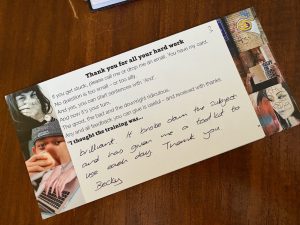
Workshops and training courses
When you bring a team of busy people together for a workshop, the first thing that happens is that you free them from the tyranny of their inboxes for a few hours. The second thing that happens is that they can talk to one another, face-to-face. This, alone, is a positive step towards better communications—much more can be solved during a coffee break with people you don’t usually get to see in person than can be unravelled with yet another email chain.
What’s the problem?
When planning an in-house workshop of any type, whether it’s to develop a new brand voice or to refresh people’s copywriting skills, I’ll start with the problem that needs solving.
Common challenges include:
- The brand voice is in place, but it’s in a drawer somewhere – people need to understand how to apply it consistently
- Teams need inspiration to write about the same subjects in fresh new ways
- There’s a need to shift from writing internal to external comms
- Something’s feeling ‘off’ with the way the team’s communicating and the CEO can’t quite pinpoint what it is
On a wider scale, this can look like:
- Change – writing for new audiences or in new formats
- Transformation – taking teams on a journey from how they’re used to writing to adopting a new tone of voice and writing style
- Culture – supporting and engaging teams in communicating organisational change
- Unifying voices across your teams and departments – the creation of clear messaging frameworks
Workshop ROI
Investing in your teams to explore the writing they need to do can give them permission to bring themselves wholly to the task, enable them to play to their talents, and allow them to fulfil their potential.
A workshop gets teams who are sitting in that spotlight of scrutiny to remember that the rules of audience-first, outcome focussed communications in plain English aren’t just applicable to them, they’re probably more important to them than to teams in any other sector.
And when they remember to write to their audience, keep their call to action front of mind, and keep things simple they can save time and gets better results – and feel happier and more confident in their roles too.
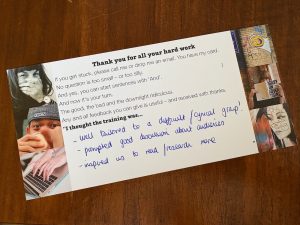
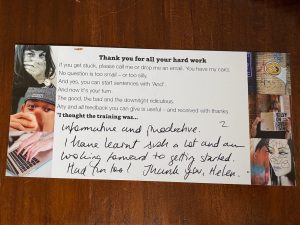
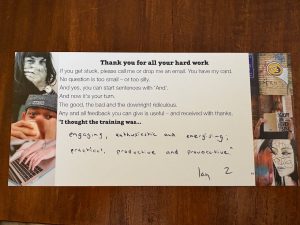
Copywriting support
Strict regulatory oversight also means that plugging business data into a tool like Chat GPT isn’t an option. As well as training courses and workshop, I provide copywriting support for projects that demand I work in confidence – with hefty procurement forms and strict NDAs signed as standard.
These include:
- Case studies
- Annual reports
- Stakeholder interviews
- Educational or explainer scripts
I’ll help you train your teams to write effective copy with enthusiasm. And translate technical operations into language non-experts (and regulators) can trust and understand. So you can balance technical rigour with clarity and flow. Structure content so busy stakeholders can get the right information fast. And position yourself as a credible leader in your sector, without unnecessary jargon.
For more information on team workshops and copywriting support: hello@haydngrey.co.uk
“Katherine knows her stuff, and is an absolute joy to work with. She’s a valued partner and specialist, and works with us as an extension of our core creative, digital and strategy teams. And that’s for projects and clients working with and in confidence in some very challenging sectors. This is actually a bittersweet recommendation for me, why? Because she’s great and we want to keep her all to ourselves.”
Steve Gill, Managing Partner, Forepoint